Why Winter Watering Is Vital for Tree Health
 Codi Coghlan
Winter in places like Durango can fool people into thinking trees don’t need water.
The canopy goes quiet, but roots stay active, slowly using stored energy and moisture to prepare for spring growth. When the air is dry, the sun is strong, and storms are spaced out, those roots can run short on water, even with snow.
For a lot of landscapes here, winter watering is the difference between trees that limp into spring and trees that leaf out strong and resilient.
Why “Dormant” Trees Still Dry Out
Even when trees are dormant, they continue to lose moisture through roots and, in the case of evergreens, through needles on sunny and windy days. In Durango’s climate, long gaps between meaningful snow or rain let soil dry out in the top foot where most absorbing roots live.
Key Points About Trees in Winter:
- Roots can grow and repair during winter when moisture is available, setting the stage for healthier spring growth.
- Evergreens are especially exposed because they keep their foliage and continue to transpire year-round.
- Newly planted and young trees, with small, concentrated root systems, dry out faster and are less able to bounce back from winter stress.
What Happens When Winter Watering Is Ignored
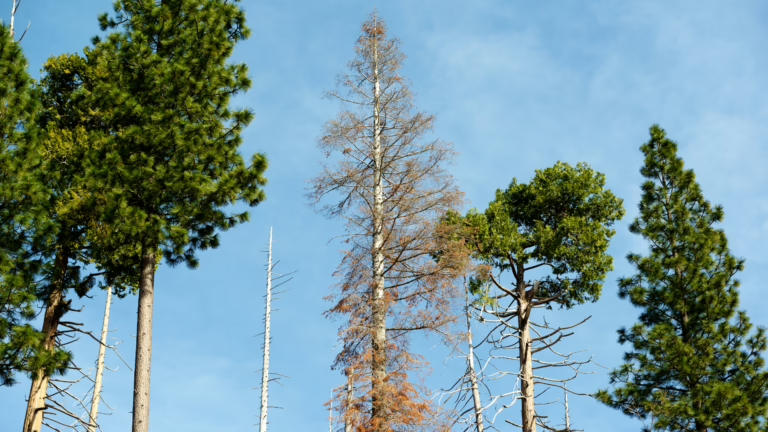
The damage from a dry winter usually shows up later. Trees might look fine until warmer weather arrives, then start revealing the cost of a thirsty dormant season.
Common Issues After Dry Winters Include:
- Browning or scorched needles on evergreens, especially on the windward or southwest side.
- Sparse foliage, twig dieback, and slow growth in spring because fine roots were lost in dry, cold soil.
- Higher susceptibility to insects and disease as stressed trees divert energy away from defense.
- Increased bark injury and sunscald on thin-barked trees when moisture is low and temperatures swing between warm days and freezing nights.
How to Water Trees During Winter
Winter watering is less frequent than summer watering, but it needs to be intentional. The timing is as important as the amount.
Use These Winter Watering Guidelines for Established Trees:
- Pick the right day
- Water when daytime temperatures are above about 40°F and the ground is not frozen or snow-covered.
- Midday is ideal so water can soak in before temperatures drop again overnight.
- Aim for slow, deep moisture
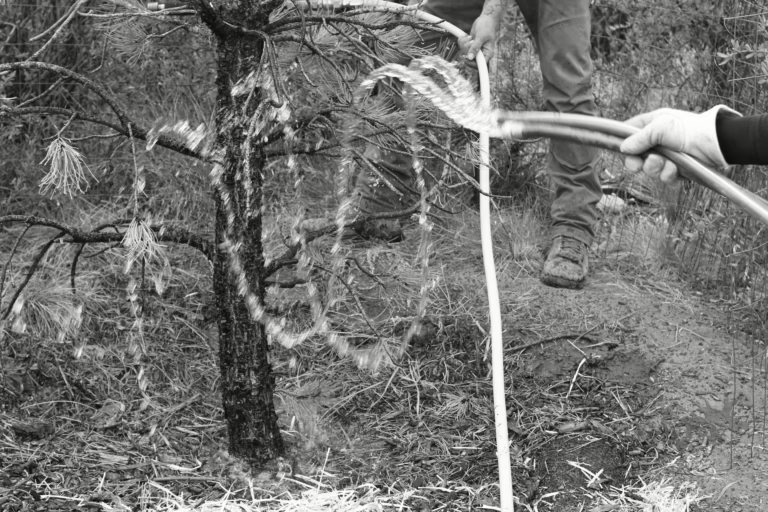
- Use a soaker hose, drip line, or a gently running hose to wet the soil 8–12 inches deep under the canopy.
- Move the water around the dripline and just beyond, since many absorbing roots extend past the branch spread.
- Follow a simple volume rule
- Plan for about 10 gallons of water per inch of trunk diameter per watering during extended dry periods.
- In very dry winters, this might mean watering once every 3–4 weeks when there’s little or no lasting snow cover.
- Check both soil and mulch
- Probe 6–9 inches down with a screwdriver or trowel; if soil is dry, it is time to water.
- Maintain a 2–4 inch layer of mulch out to the dripline, keeping it a few inches away from the trunk to protect bark while conserving moisture.
Extra Attention for Newly Planted Trees
The first one to two winters are make-or-break seasons for young trees in Durango. Their root systems are small and concentrated, which makes them highly sensitive to gaps in moisture.
Winter Watering Guidelines For Newly Planted Trees:
- Water more often during dry stretches — typically every 2–3 weeks when conditions allow and there is no lasting snow cover.
- Apply 5–10 gallons per inch of trunk diameter, focusing on the root ball and just beyond where new roots are expanding.
- Use trunk wraps on thin-barked species to reduce sunscald and freeze–thaw stress.
- Check stakes and ties after winter storms so the tree can stabilize and root in properly.
How Arborists Can Help
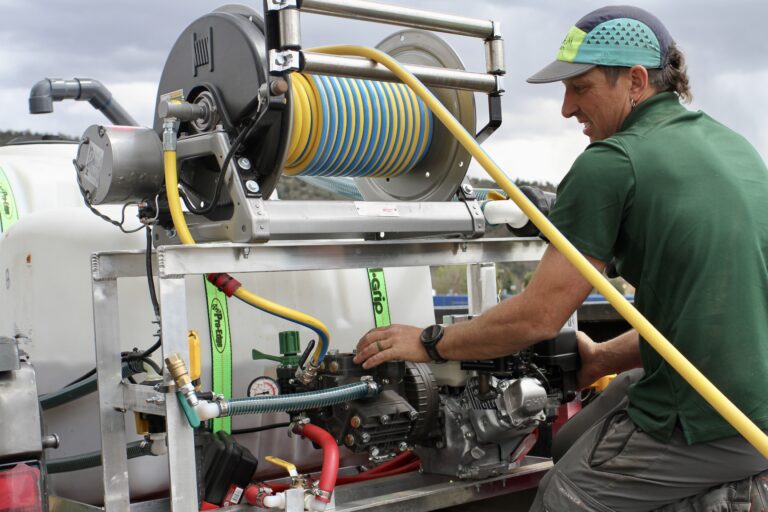
Momentum Tree Experts offers deep root watering services, as well as anti-desiccant spray for added support. Anti-desiccant creates a thin, protective coating on evergreen foliage that helps reduce moisture loss from needles and leaves during Durango’s dry, sunny, and windy winter days, lowering the risk of winter burn and browning.
If you would like a winter tree health check in Durango, Colorado, schedule a visit with our ISA-Certified Arborists.