Japanese Tree Care Techniques: What Yukitsuri & Niwaki Teach Us About Tree Care
 Codi Coghlan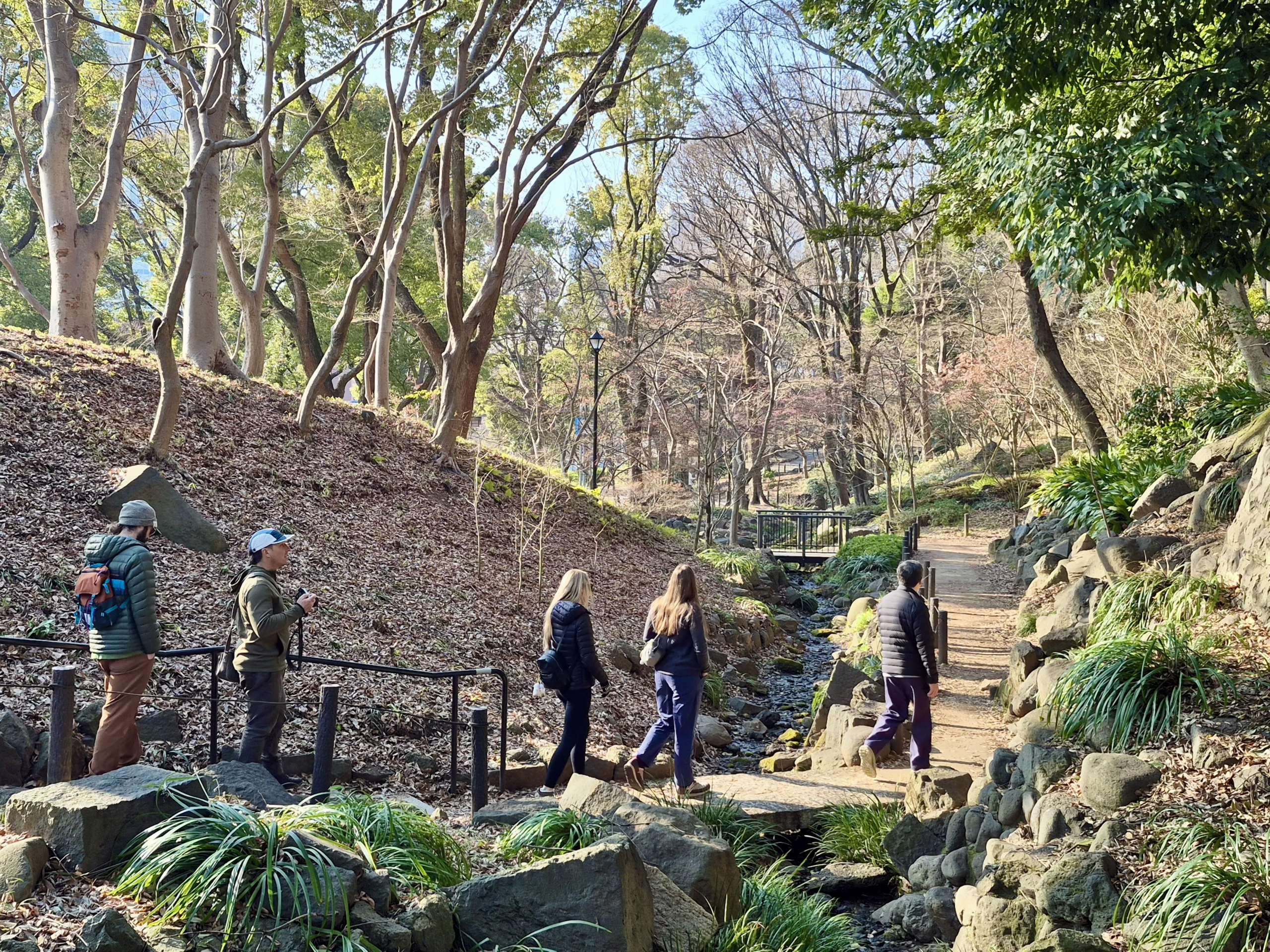
In January 2026, the Momentum team traveled to Japan to observe how trees are cared for there. During strolls through lantern-lined streets and gardens, it became clear almost immediately that Japanese Arborists work with trees, treating pruning as an art form.
“Japan is one of the most wonderful places to travel,” says Moses Cooper, owner of Momentum Tree Experts. “Brimming with innovation and creativity, everything feels intentional, well cared for, and thoughtfully designed, especially the trees.”
In Japan, tree care has been refined into an art form over centuries. Rather than attempting to control nature, Arborists guide and influence growth in ways that enhance both a tree’s health and its natural form. The result is a style of stewardship that balances beauty, longevity, and resilience, allowing trees to develop in harmony with their surroundings.
This philosophy is reflected in traditional practices such as Yukitsuri, Niwaki, and Komomaki, where tree care is rooted in observation, anticipation, and a long-term relationship with the tree. These techniques demonstrate a commitment not just to maintaining trees, but to understanding and supporting their natural development over time.
The Cultural Mindset Behind Japan's Tree Care
Think of the sculpted black pines of Japan’s historic gardens, their branches carefully trained over decades to appear effortless, as though nature alone shaped them. Japanese landscapes are designed to appear natural, but they are built on precision. Each branch, rock, and path is placed to create a natural illusion, a balance between order and spontaneity. This paradox reflects mono no aware, the idea that beauty is heightened by the knowledge that all things are temporary.
Japan’s approach to tree care grows from this same cultural mindset:
- Trees are cared for over generations, not seasons.
- Maintenance is intentional and preventative.
- Beauty and health are considered inseparable.
The goal is not to force form, but to reveal structure, to guide growth rather than control it. Problems are avoided before they arise, and each cut or tie carries purpose. In many ways, this philosophy parallels bonsai. The work isn’t about domination, but discovery: drawing out a tree’s character and strength.
Perhaps the greatest difference lies in time itself. Japanese tree care looks decades ahead, not to one season, or even one lifetime, but to how a tree will stand, age, and hold together 10, 20, or 50 years from now.
These values are not abstract ideas. They’re visible in the techniques Japanese Arborists have refined over centuries.
What is Yukitsuri? (雪吊り)
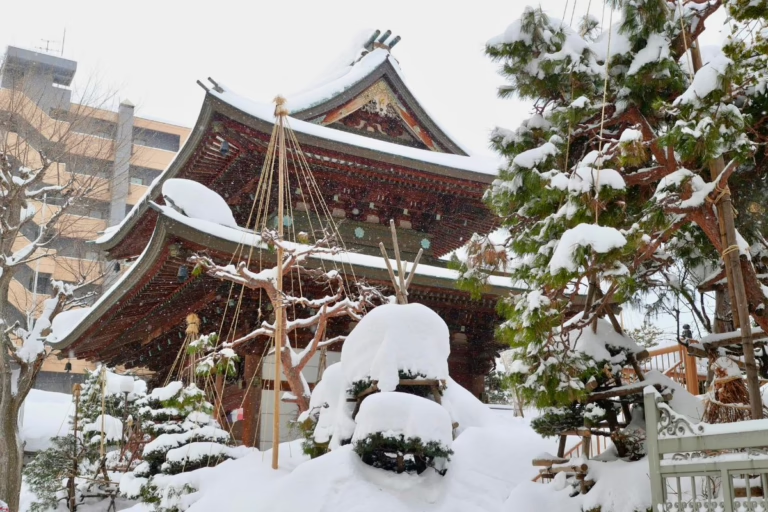
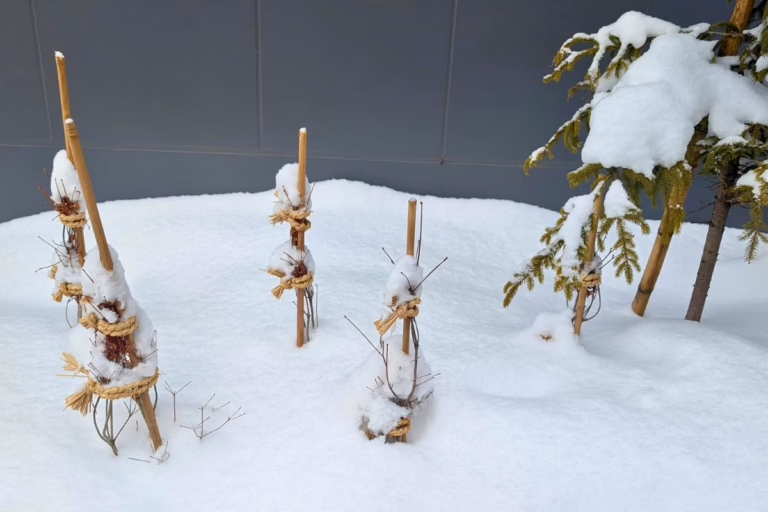
Yukitsuri, meaning “snow hanging,” is a traditional method used to protect trees from heavy snow. Ropes extend from a central pole down to the branches, forming a geometric, cone-like structure that cradles the canopy.
These umbrella-shaped supports are especially common in the snowy Hokuriku region, including Toyama, Fukui, and Ishikawa prefectures. In Kanazawa’s Kenrokuen Garden, gardeners begin each November attaching ropes from tall poles to the branches to prevent them from snapping under the weight of wet snow. Yukitsuri combines practical arboriculture with traditional aesthetics, showing how Japanese craftsmanship merges function with beauty.
Instead of waiting for branches to fail under snow load, this system:
- Redistributes weight
- Reduces stress points
- Supports the tree before damage occurs
All while resembling a work of art.
What is Niwaki? (庭木)
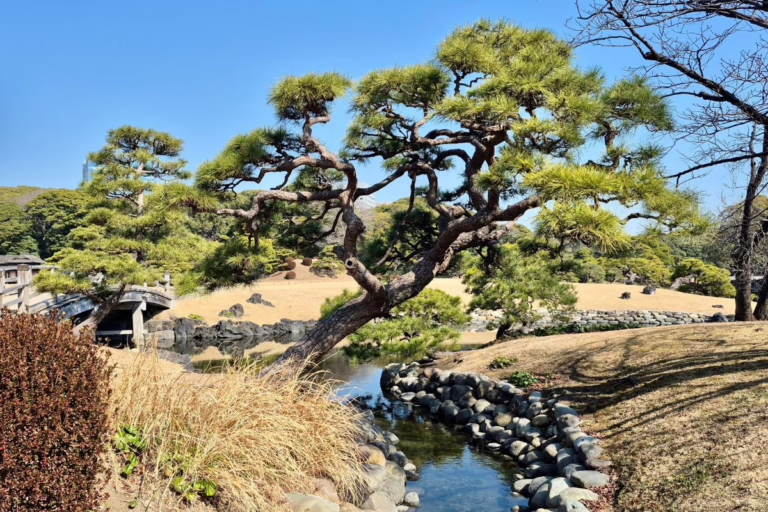
Niwaki translates to “garden tree,” but it also describes the practice of intentionally shaping trees over time.
In the niwaki pruning style, trees are shaped to appear older than they are. Gardeners encourage broad trunks, gnarled or drooping branches, and open canopies that reveal the tree’s internal structure through the foliage. Some trees are styled to resemble those shaped by wind or lightning, giving them the character of age, endurance, and resilience.
At first glance, niwaki may look like strict control, but good pruning is really about:
- Understanding how a tree wants to grow
- Enhancing its natural structure
- Removing what doesn’t belong
When pruning is rushed or purely cosmetic, such as shearing or forcing artificial shapes, it can erase a tree’s natural character. Working with a tree’s growth habits instead creates:
- Layered branching
- Balanced weight distribution
- Better light penetration and airflow
Most importantly, it preserves a tree that still feels like a tree, not a topiary.
Komomaki (菰巻き)
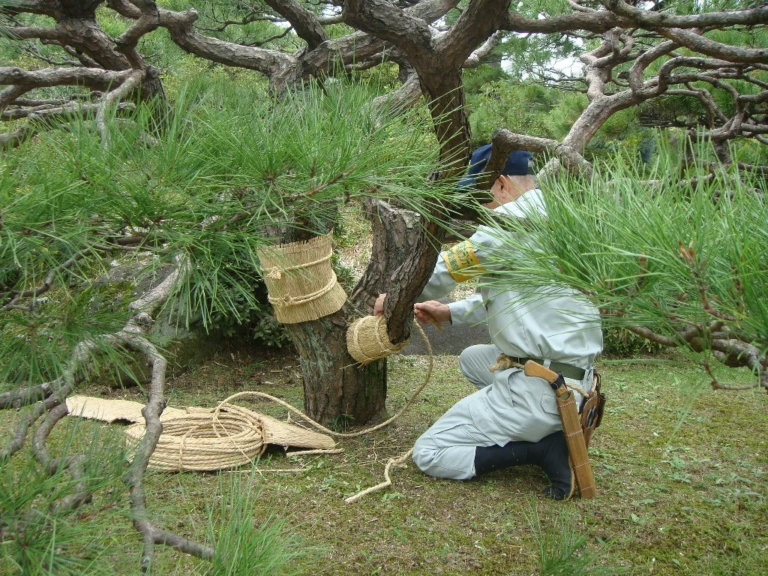
For more than 400 years, Japanese gardeners have practiced Komomaki: wrapping tree trunks with straw during winter. Developed in the Edo-period gardens of daimyo, the technique involves binding woven rice straw around pine trunks, loose at the top and tight at the bottom, to trap pest larvae as they move down the tree in cold weather.
The straw attracts insects such as the pine dead leaf moth, which overwinter inside the warm, protected layer and are then removed before spring. By harnessing natural behavior rather than fighting it, Komomaki protects trees while embodying the Japanese ideal of working in harmony with nature.
What This Could Mean for Tree Care in Places like Colorado
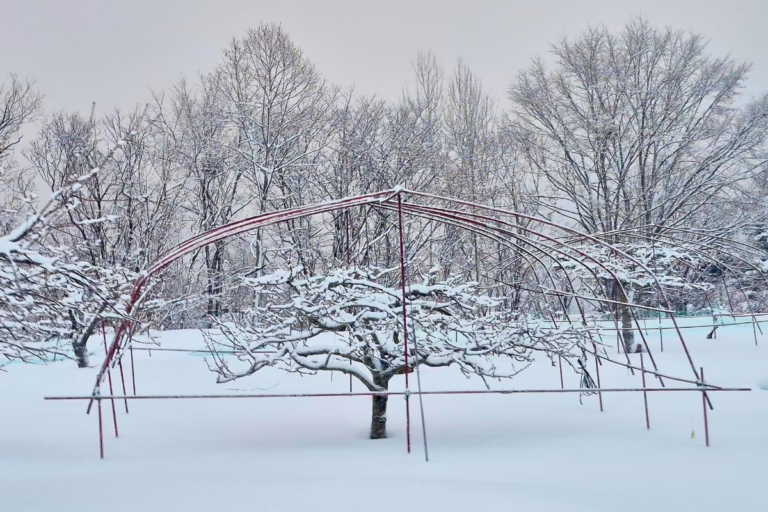
No one in Durango is likely to install a full Yukitsuri system, but the principles translate well:
- Supporting weak branch unions before heavy snow arrives
- Pruning for structure, not only clearance
- Thinking about how a tree will grow, not how it looks today
At Momentum Tree Experts, that’s the direction of the work:
Less reaction, more intention.
Less control, more understanding.
Because the best tree care is not about forcing trees into shape. It’s about helping them grow well on their own over time.
Interested in proactive tree care? If you want a long-term plan for your landscape, the next step is scheduling a consultation and starting to think in decades.
ありがとうありがとう