How Do We Support Trees During Drought When Water Use Is Restricted?
 Codi Coghlan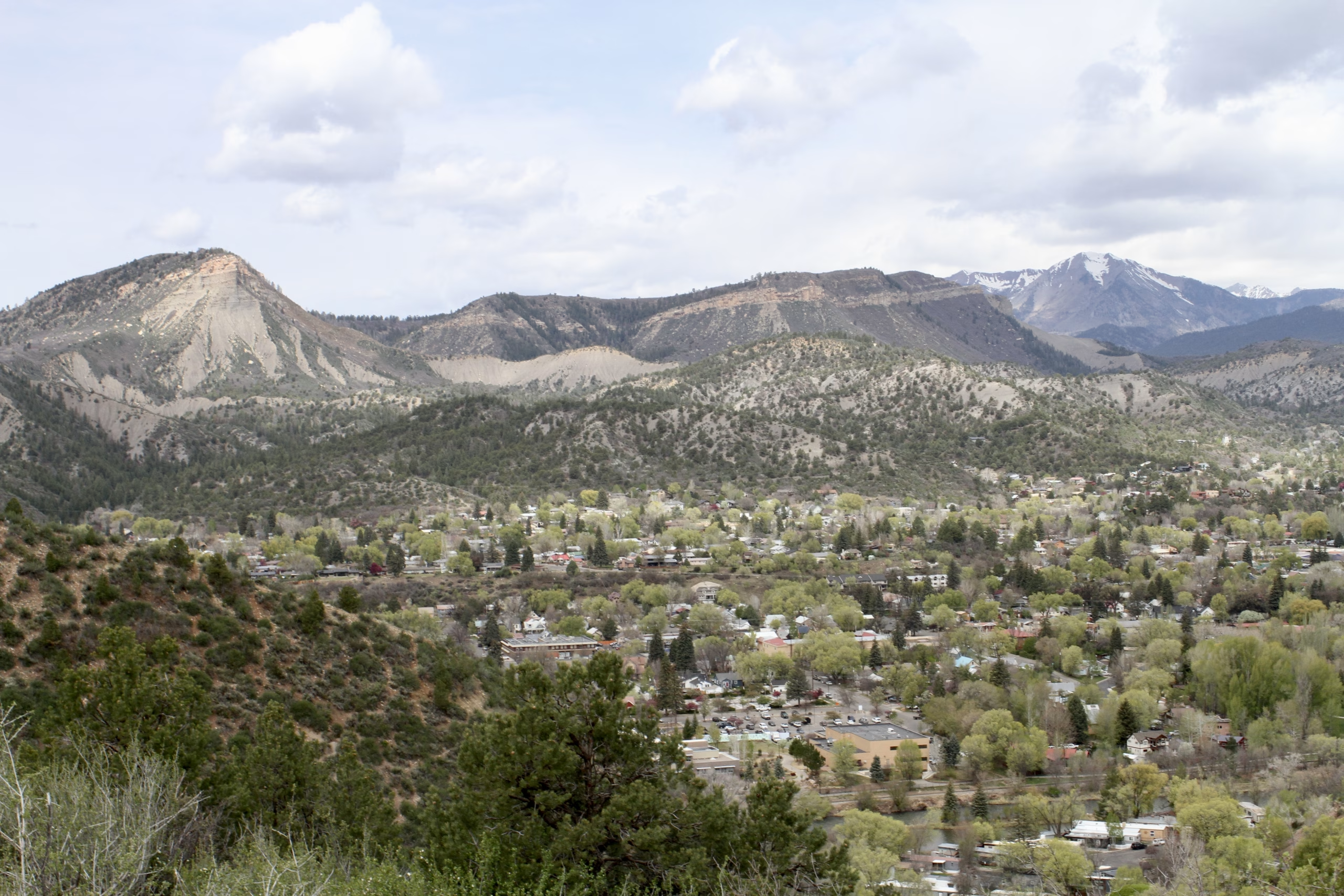
In Durango and across Southwest Colorado, the 2025–2026 winter brought below-average snowpack and limited soil moisture recharge. Snowpack in the San Juan Mountains acts as a natural reservoir, slowly releasing water into soils as it melts. When that snowpack is reduced, soils enter spring drier than normal, with less deep moisture available to roots.
As we move into the growing season, many trees are already starting at a deficit. Before rising temperatures, increased evapotranspiration, and potential water restrictions even come into play. Warm, dry spring conditions can accelerate moisture loss from both soil and plant tissue, compounding early-season stress.
If dry conditions persist through May and into summer, trees experience cumulative stress. This weakens natural defense systems, making them more susceptible to common regional issues like borers, aphids, scale, and opportunistic fungal pathogens.
“We’re already seeing the effects in Durango,” says ISA-Certified Arborist, Caleb Leland of Momentum Tree Experts. “In some areas, recently planted trees have not made it through the winter, including a significant number planted within the last two years.”
Establishment years are critical, and without consistent moisture, even hardy species can decline. Moisture, both natural and supplemental, plays a defining role in early survival and long-term health.
Moisture Matters Most
Trees don’t only need water during the growing season. They depend heavily on moisture stored in the soil profile from winter.
That stored moisture supports:
- Early root activity before irrigation systems are active
- Bud break and initial leaf expansion
- Nutrient uptake during the first phase of growth
When soil moisture is depleted:
- Fine roots, which are responsible for water and nutrient uptake, begin to die back
- Trees must divert energy from growth to survival
- Hydraulic function within the tree becomes strained, reducing its ability to move water efficiently
This is especially critical for younger trees. Newly planted trees often have limited root zones confined to the original planting area, making them far more dependent on consistent, accessible moisture. Without it, they lack the buffering capacity that mature trees develop over time.
So the challenge becomes clear: how do we support trees when natural moisture is insufficient, and how do we do it efficiently during a drought when water use may be restricted?
Deep Root Watering
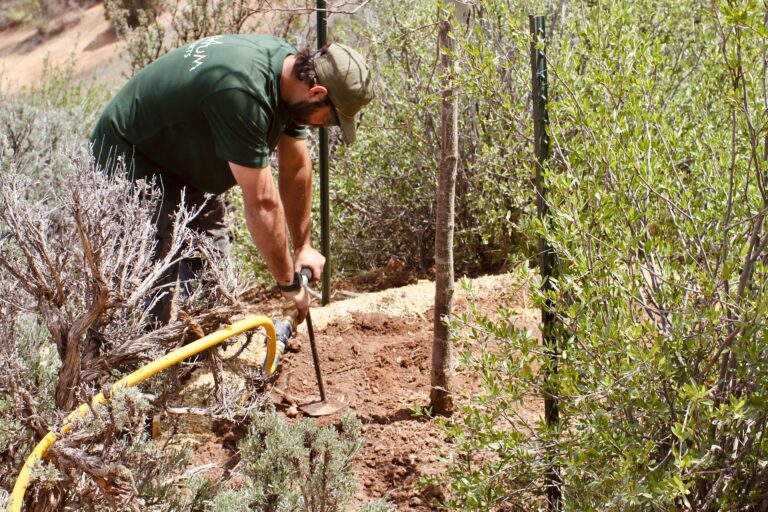
Many conventional irrigation methods, especially sprinklers, primarily wet the soil surface. In dry climates, a significant portion of that moisture is lost quickly to evaporation or never penetrates deeply enough to reach the root zone.
Deep root watering addresses this by delivering water 6–12 inches below the surface, where the majority of a tree’s absorbing roots are located.
The deep root watering approach:
- Promotes deeper, more drought-resilient root systems
- Reduces surface evaporation losses
- Improves water infiltration in compacted or dry soils
- Delivers water directly where it can be used most effectively
In essence, it shifts the focus from how much water is applied to how effectively that water is used.
Targeted Soil Treatments for Drought Resilience
Water alone isn’t always enough. Soil conditions determine how long that water remains available.
In many landscapes, soils are compacted, low in organic matter, or structured in a way that limits both infiltration and water-holding capacity. Targeted amendments can significantly improve these conditions.
At Momentum Tree Experts, our treatments include:
- NutriRoot: encourages fine root development and improves nutrient uptake, particularly under stress conditions
- Hydretain: a hygroscopic compound that captures water vapor and converts it into usable moisture in the root zone
- Biochar: a stable form of carbon that increases porosity, improves water retention, and supports beneficial soil microbes
- Humectants: compounds that help bind water in the soil, slowing drainage and evaporation
- Hygroscopic compounds: attract and hold water molecules, extending moisture availability between watering cycles
Together, these treatments enhance soil function, allowing it to store more water, release it more gradually, and support healthier root systems.
Making Every Drop Count
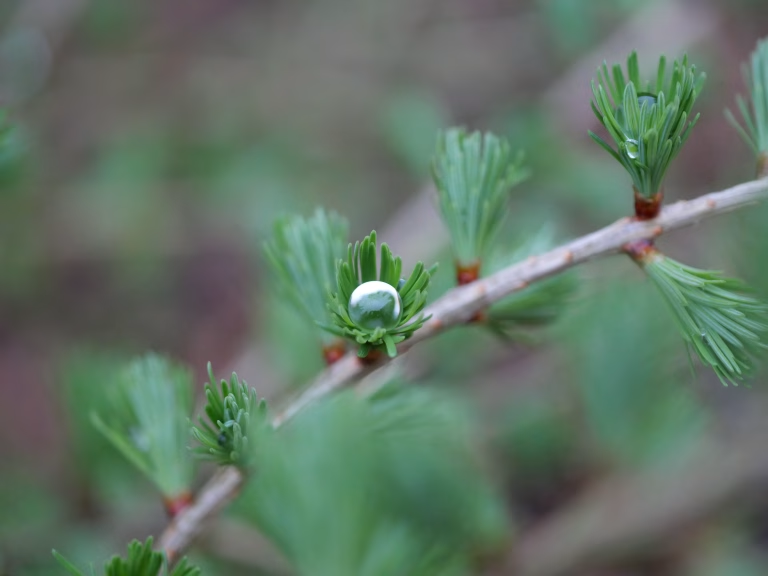
With the potential for irrigation and watering restrictions, efficiency becomes critical.
If watering frequency is limited, the goal shifts to maximizing the impact of each application. By improving both delivery and retention, it becomes possible to:
- Extend the effectiveness of each watering event
- Reduce total water demand over time
- Maintain tree health even under constrained conditions
This approach aligns with how trees naturally function, favoring deeper, less frequent watering supported by soils that can retain and supply moisture over time.
Reactive vs. Proactive Tree Care
Many signs of drought stress, such as leaf scorch, thinning canopies, and dieback, don’t appear until after prolonged stress, when a tree is already compromised.
Common indicators include:
- Slower or uneven leaf-out
- Browning along leaf edges
- Thinning canopies or undersized leaves
- Dry, compacted soil around the base
By the time these symptoms are visible, recovery becomes more difficult and less predictable.
A more effective approach is to reduce stress early, before symptoms develop. Trees are long-term investments, and premature decline carries both financial and environmental costs: lost canopy, reduced shade, and years of lost growth. In most cases, maintaining an existing tree is significantly more cost-effective than removing and replacing it.
Proactive care focuses on strengthening root systems, improving soil performance, and adapting to environmental conditions before they become limiting.
In a dry year like this, that shift, from reactive to proactive, can make the difference between survival and decline.
The goal isn’t simply to help trees get through one season, but to support long-term health, stability, and resilience in an increasingly variable climate.
Schedule a consultation if you’re interested in diagnosis, deep root watering, soil treatments, or strategies to help your trees withstand dry conditions.