
How Arborists Tell If a Tree Branch Is Dead or Alive in Winter
 Codi Coghlan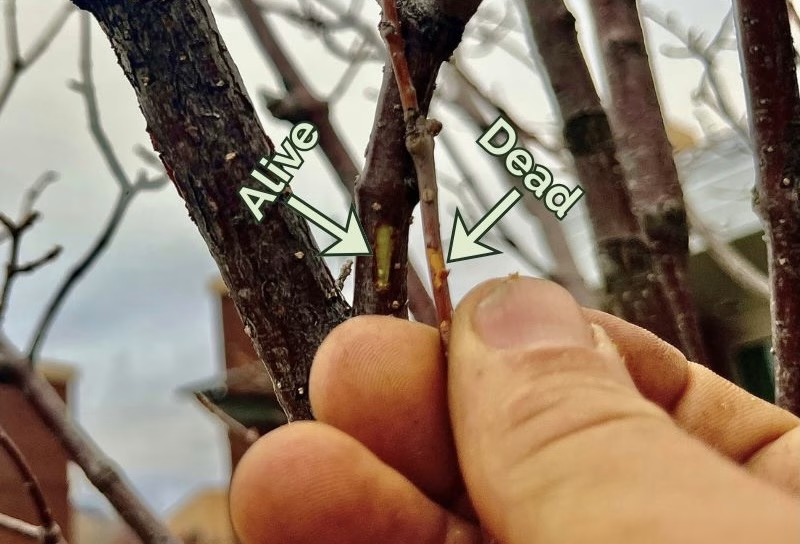
In winter, trees change their posture. Leaves are gone, growth has slowed, and what remains is structure: branch, bark, and bud. To the untrained eye, everything can look lifeless.
Knowing whether a branch is dead or simply dormant is one of the most important skills in tree care, especially during winter pruning and orchard restoration season.
Dormancy Is Not Death
Dormancy is a survival strategy, not a shutdown.
As daylight shortens and temperatures drop, trees slow their growth and conserve energy. Deciduous trees shed their leaves to reduce water loss, while evergreen trees reduce metabolic activity. But internally, the tree is still alive and functioning at a slower pace.
What surprises many people is that next spring’s growth is already planned. Leaf and flower buds form during the previous summer, when sunlight is strongest. Winter is simply the holding pattern: energy stored, growth paused, systems protected.
This is why bare branches alone tell us very little.
The First Thing We Look For: Buds
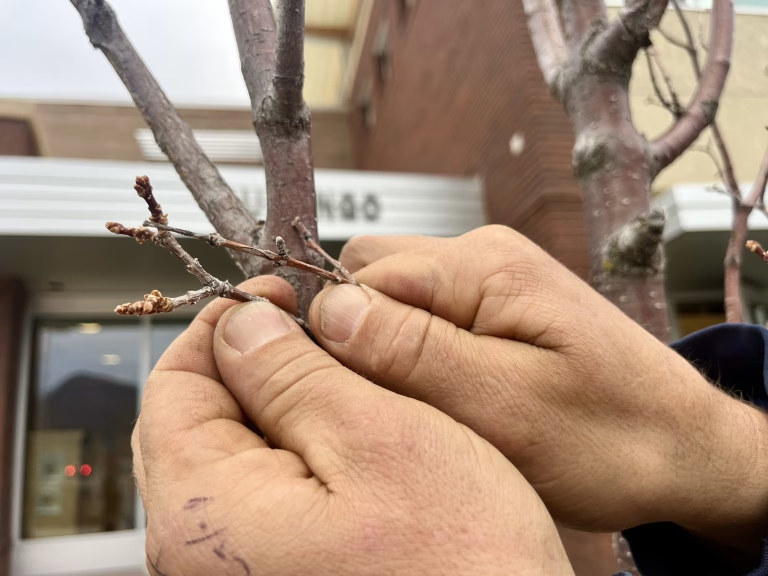
Buds are one of the clearest indicators of life in winter.
On a living deciduous tree, buds are visible along the branches. They’re usually firm, slightly swollen, and well-defined. Each one contains the blueprint for future leaves or flowers.
A dead branch, by contrast, has no viable buds. You may see only scars where buds once were, or small hollows where growth failed. The tips often look dry and wrinkled rather than smooth and intact.
If buds are present and healthy, the branch is alive, no leaves required.
Bark Tells a Story
Bark condition gives us another important set of clues.
On healthy branches, bark maintains color and flexibility. It may show natural lines or lenticels (small pores that allow gas exchange), but it remains attached and intact. Younger shoots often show richer coloration and smoother texture.
Dead branches tend to turn pale gray or nearly white. The bark may peel away, crack deeply, or pull back from the wood beneath it. These are not surface imperfections, they’re structural failures. When cracks extend into the wood itself and the bark loses all elasticity, the tissue underneath is no longer active.
Subtle wrinkling can also be an early warning sign, especially when it doesn’t match the normal texture of the species.
The Scratch Test
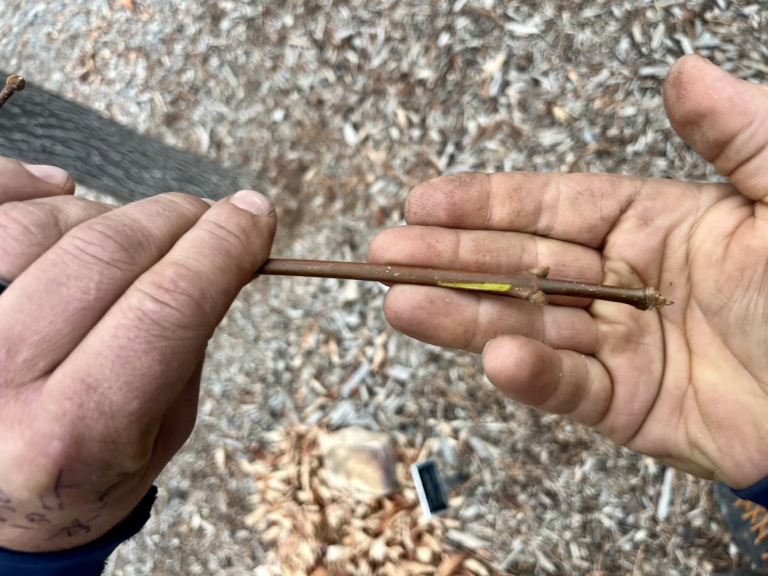
When we need confirmation, Arborists may use the scratch test.
By gently scraping away a small section of outer bark on a twig, we expose the inner layer. If the tissue underneath is green and moist, the branch is alive. Green indicates functioning cambium, where water and nutrients still move.
If the layer beneath is brown, gray, or dry, the branch is dead.
This test should be done carefully and intentionally. Scratching healthy branches out of curiosity can create entry points for disease or pest insects, so it’s best left to professionals who know where and how to check.
Flexibility vs. Brittleness
Living wood bends. Dead wood breaks.
Healthy branches are designed to move with wind and snow load. When gently bent, a live twig will flex and return to position. A dead one snaps cleanly and easily.
This difference matters in winter storms. Brittle branches are far more likely to fail suddenly, which is why deadwood removal is an important safety step during winter pruning.
Why This Matters for Pruning
Dead branches and living branches are pruned differently.
Deadwood can often be removed entirely without affecting the tree’s energy reserves. Living branches require more strategic decisions: cutting back to laterals, preserving structure, and timing work appropriately for each species.
For example, live oak branches are pruned during specific windows (typically October through early April) to reduce the risk of spreading oak wilt. Understanding what’s alive and when it’s safest to cut is core Arborist knowledge.
Winter is one of the best times to prune precisely because these distinctions are easier to see.
Signs a Tree or Branch Is Alive
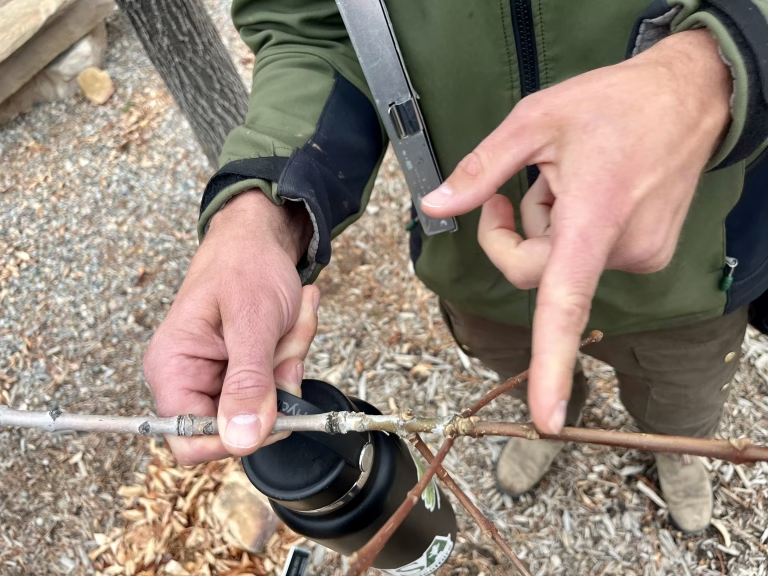
While no single sign guarantees perfect health, Arborists look for patterns. Indicators of living tissue include:
- Bark that is intact and firmly attached
- Flexible branches that bend rather than snap
- Healthy buds during dormancy
- No excessive frass (insect waste) or decay
- Normal leaf drop patterns for the species
These observations form the baseline of any tree health assessment.
Fungal Growth, Insects, and Decline
When a tree can no longer produce new growth, its bark thins and loses its protective function. This allows fungi and insects to move in.
Some fungi, like turkeytail, grow only on dead or severely compromised wood. Others appear after a tree has already declined internally. Likewise, frass at the base of a tree or beneath loose bark often indicates the tree could not defend itself against infestation.
These signs usually tell us not just that a branch is dead, but why.
Why Dead Branches Shouldn’t Be Ignored
Dead branches don’t recover. And they don’t announce when they’re about to fall.
In arboriculture, hanging deadwood is often called a “widow maker” for a reason. Dead branches can fail without warning, damaging property, injuring people, or tearing down healthy parts of the tree as they fall.
If a tree is on your property, responsibility for that risk falls to you.
If something about your tree doesn’t look right, especially in winter, it’s worth having it evaluated.
Winter is an ideal time for assessing structure, pruning deadwood, and identifying potential hazards. Our crews at Momentum Tree Experts work through the winter whenever conditions are safe, and we’re trained to distinguish dead branches from dormant ones, even when everything looks bare.
If you’re unsure about the health of your trees, we’re happy to help you understand what you’re seeing and what steps, if any, make sense next.

 momentumtree