5 Things to Know About Trees Under Heavy Snow
 Codi Coghlan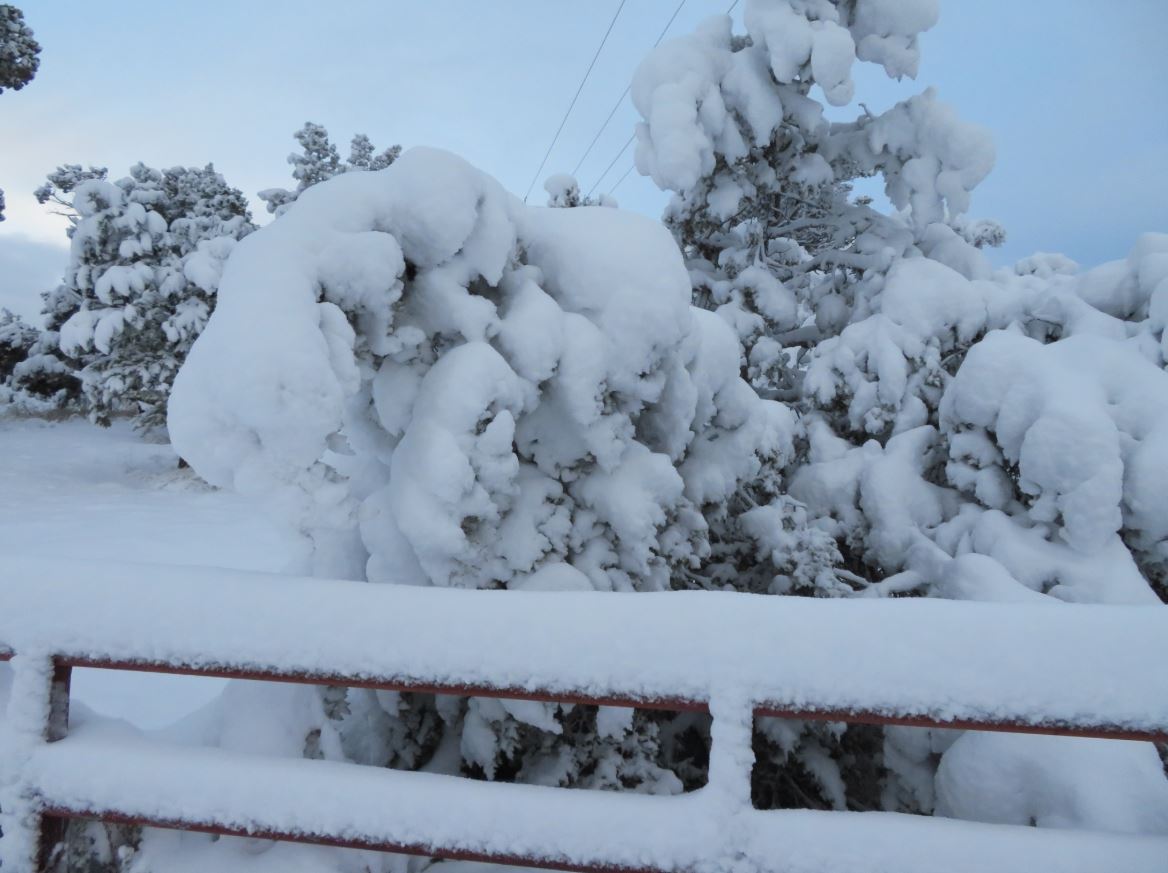
There’s a certain feeling that comes with waking up to a few feet of snow that weren’t there when you went to bed. If you’re an evergreen, that feeling is several hundred pounds heavier.
Trees under heavy snow experience increased loads on branches and branch unions, while wind can move those loads through the canopy. Below ground, frozen soils and fluctuating temperatures can affect drainage, water availability, and nutrient availability. How a tree responds depends on its architecture, previous damage, root health, and more.
Here are 5 things to know about heavy snow and your trees before the next blizzard.
1. Dead and Damaged Wood Can Pose a Risk
Snow doesn’t necessarily create a weakness; it adds load to whatever condition is already there.
Cracks, decay, and old wounds can reduce the amount of sound wood available to carry that load. A branch may still be alive and look substantial from the ground even when decay or damage has weakened it internally.
Once a branch dies, the tree can no longer add new wood to address those weaknesses.
Where that branch is located matters, too. A large limb over a driveway, playground, or walkway presents a different risk than an unused portion of yard. Inspect accordingly.
2. How Snow Affects Your Tree Depends on Its Structure
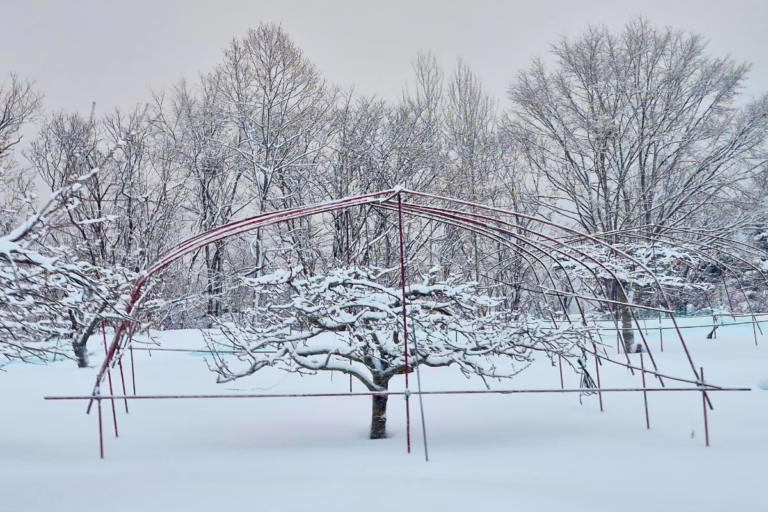
Snow doesn’t load every tree the same way. Long, spreading branches, uneven crowns, multiple trunks, and branch attachments all influence where weight and stress develop.
A mature cottonwood, for example, may have long limbs extending far from the trunk. Wet snow near the end of those limbs creates greater bending force at the attachment, like a weight gets harder to hold as you extend your arm.
Multiple trunks deserve attention, too. Siberian elms commonly develop large upright stems that meet at narrow unions. If bark is trapped between them, the wood connection may be weaker than it appears, and snow and wind can concentrate stress where the stems meet.
How a tree is built determines where snow collects, how its weight is carried, and where stress develops.
3. Healthy Trees in Winter Start Below Ground
Roots depend on healthy soil for water, oxygen, and nutrients. Compaction, poor soil structure, and inadequate moisture can all affect a tree’s health and resilience.
Fall is a good time to evaluate the root zone before the ground freezes. Plant Health Care can address specific soil and root conditions through treatments such as BioRush+ and air spading. Depending on the site, the goal may be to improve soil moisture, add nutrients, humic acids, or mycorrhizae that support living tissue and metabolic processes, or reduce compaction so air and water can move more easily through the root zone.
Adequate moisture going into winter is especially important in Southwest Colorado, particularly for evergreens that continue losing water through their foliage.
4. Pruning Can Reduce Stress Under Snow
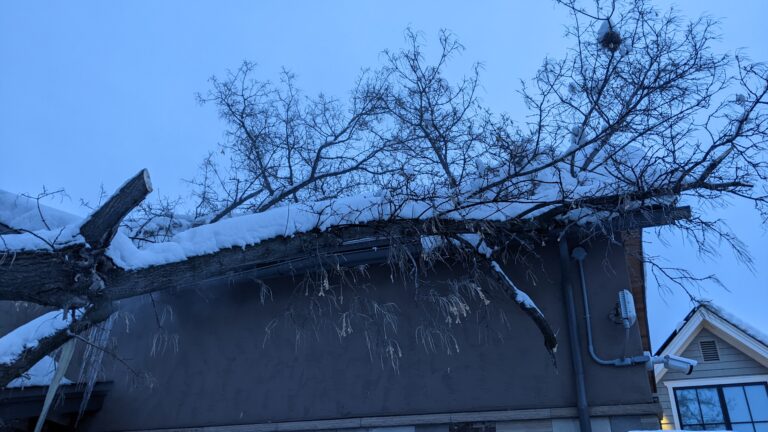
Prescription pruning means making specific cuts to accomplish a specific structural goal.
A Prescription Pruning Qualified Arborist might selectively shorten the outer portion of a long, overextended cottonwood limb. Reducing weight farther from the trunk can reduce leverage at the branch attachment without removing the entire limb.
More pruning does not necessarily make a tree safer. Trees depend on their foliage to produce carbohydrates, and every pruning cut creates a wound the tree must respond to. The goal is to make the right cuts for the specific concern, such as snow load.
5. Cabling Can Support Vulnerable Branch Unions
A mature tree with two large stems growing from a narrow or vulnerable union may benefit from adding cabling. As wet snow loads each side of the canopy, the stems can pull in different directions, increasing stress where they meet.
Cables installed higher between the stems help limit that separation and share some of the load, reducing stress at the union while allowing the tree to retain both stems.
Cabling doesn’t eliminate the structural concern, but it can help manage forces like snow acting on a vulnerable union when retaining the tree is appropriate.
Before Heavy Snow Arrives
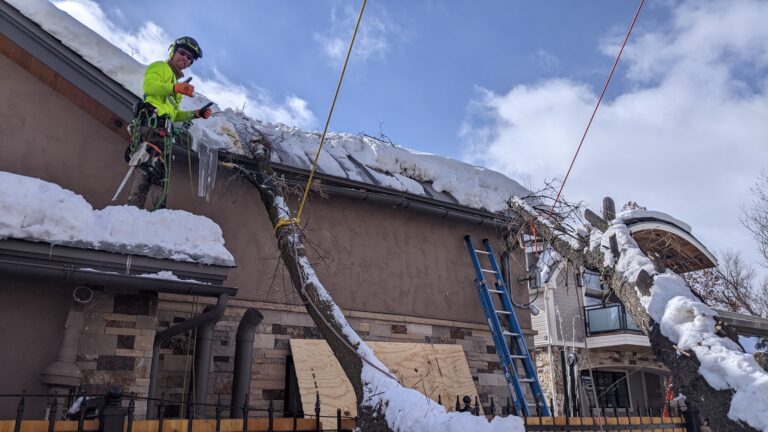
Fall gives us an opportunity to evaluate trees before heavy snow begins adding load to their branches. It’s also a good time inject soil nutrients before the ground freezes.
If you notice a long limb over your house, an old crack, significant deadwood, or changes in your tree’s overall health, you’re always welcome to have an ISA-Certified Arborist take a closer look.